“I can’t stop snacking, what is going on and why don’t I have any willpower?”
A lot of women with ADHD say they’re always thinking about food or reaching for snacks. Why does that happen, even when you’re not really hungry?
We teamed up with the delightful Dominique Munday, a clinical nutritionist (in training) and certified life coach specialising in ADHD, gut health, and the real-life gap between knowing what to do and actually doing it. She's based in Sydney and sees clients through The Munday Method — her practice built around the idea that behaviour change has to start with identity, not information. Her own late ADHD diagnosis sits at the centre of her work and is why she cares so much about making nutrition genuinely usable for the way neurodivergent brains actually function.
Check out what she had to say here :
A lot of women with ADHD say they’re always thinking about food or reaching for snacks. Why does that happen, even when you’re not really hungry?
There are a few factors at play, but the patterns I see most often come down to meal timing and dopamine-seeking. A lot of women with ADHD wake up not feeling hungry, skip breakfast, and don't eat their first real meal until lunch and that sets off a cycle of snacking for the rest of the day.
The other piece is that we're often just chasing dopamine. When you notice yourself reaching for a snack, I always encourage clients to pause and ask: what do I actually need right now? Is it food? Water? Comfort? Relief from boredom? Once you can name what the snack is serving, you can start replacing it with something that actually meets that need.
If you had to keep it simple, what are the basics of eating in a way that actually helps your brain stay clear and focused?
Three things. Breakfast within 30–60 minutes of waking with at least 25g of protein, ideally savoury and warm so your stomach can actually digest it easily first thing. Water, consistently throughout the day, women need 2.1–2.8L as a baseline, and an extra 500ml for every 30 minutes of exercise. And eating a balanced meal every four hours: protein, fat, and carbohydrates together. This keeps your blood sugar stable and signals to your body that food is coming, so it doesn't go into panic mode.
What happens when you skip meals or just grab whatever’s easy during the day? How does that affect your energy and mood?
Skipping meals throws your blood sugar and cortisol out of balance. Your body shifts into fight-or-flight mode and redirects energy toward keeping you functioning at a base level, there's nothing left over for focus, emotional regulation, or clear thinking. And when you do eventually grab something quick, it's usually carb or sugar-heavy, which spikes your blood sugar and sets up another crash later in the day. It becomes a cycle that's really hard to break out of.
Snacking can feel automatic or mindless - What are some simple ways to cut back without trying to be “perfect” or overly strict?
The first thing I'd say is: stop trying to white-knuckle it. Willpower is not the answer here, especially for an ADHD brain. If the snacks are in the house and visible, you will eat them, that's just how our brains work. So start with your environment. Put the snacks you want to eat less of out of sight or out of reach, and make the better options the easiest ones to grab.
The second thing is to go back to your meals. A lot of mindless snacking is actually just under-eating at mealtimes; not enough protein, not enough fibre, not enough fat to keep you full. If your meals are balanced and you're eating every four hours, the automatic reaching usually quiets down significantly.
And the third thing is that pause I mentioned earlier. Before you grab something, take one breath and ask yourself what you actually need. You don't have to talk yourself out of eating, sometimes the answer really is that you're hungry. But sometimes it's thirst, boredom, or a need for a two-minute break. Naming it takes the automaticity out of it.
Meal prep sounds good in theory, but most people don’t stick to it. How do you make it easier and more realistic?
Honestly? I'm a bit of a tough-love coach here. You're an adult, you get to decide what works for you, but you do have to decide. That might mean prepping full meals, or it might just mean having some cooked ingredients in the fridge so you can mix and match without overthinking it.
What I will say is: use your higher energy days to set yourself up for your lower ones. Batch cook, fill your freezer, so there's always something available when you have nothing left in the tank. Meal prep is in my calendar every Sunday as a non-negotiable. My slow cooker is genuinely one of my favourite tools, low effort, big batches, and it does the work while I do something else. The “I don’t have time” excuse doesn’t work on me ;)
If someone wanted to feel better this week just by changing how they eat, what would you tell them to do first?
Start with breakfast. Eat within 30–60 minutes of waking, prioritise protein and fibre, drink 2.5L of water throughout the day, and eat a balanced meal every four hours. That's it. Keep it simple and stay consistent — you'll notice a difference faster than you'd expect.
What is your favorite indulgence- the thing that never fails to satisfy your treat craving ?
Ice cream, every time. I'm not really a chocolate person, but a good cookies and cream, pistachio, or salted caramel? That never fails to hit the spot.
You can find Dominique here :

Late-Diagnosed ADHD in Women: What It Really Looks Like (And Why It Took So Long To See)
By Sally Phelan · Lightworks Coaching
For a long time, ADHD was considered a condition that mostly affected young boys who couldn't sit still. If you were a girl who was quiet, high-achieving, socially capable, and compliant ,no one was looking at you.
I somehow still had all my school reports when I got my diagnosis in my 50’s (Thanks to my parents who never threw anything away ), and they all said the same thing “.. a pleasure to have in class, diligent and methodical, sometimes easily distracted but if she applies herself will do well. “
That picture has shifted significantly. But the reality is that thousands of women are still reaching their 30s, 40s, and 50s before anyone ( including themselves) considers ADHD as an explanation for a lifetime of experiences that didn't quite add up.
This post is for anyone who has recently received a late diagnosis, suspects they might have ADHD, or is trying to understand what it actually looks like in adult women.
WHY ADHD LOOKS DIFFERENT IN WOMEN :
The classic ADHD presentation- hyperactive, impulsive, disruptive, is more common in boys and men. Women with ADHD are more likely to present with what's called inattentive-type ADHD, which can look very different from the outside.
Inattentive ADHD in women often shows up as:
• Chronic disorganisation that doesn't match your intelligence or capability.
• Difficulty finishing things you started, even things you care about.
• Decision fatigue and paralysis, especially under pressure.
• Emotional sensitivity and rejection sensitivity dysphoria (RSD).
• A tendency to mask or to appear fine when everything internally is chaos.
• Extreme difficulty with time perception and managing deadlines.
• High achieving in some areas, inexplicably struggling in others.
Many late-diagnosed women describe a lifetime of being told they were "too sensitive," "scatterbrained," "not living up to their potential," or "just anxious." They built elaborate coping systems. They overworked and over-explained. And they spent enormous amounts of energy appearing consistent in a world that felt fundamentally inconsistent to them.
THE COST OF GOING UNDIAGNOSED:
Late diagnosis isn't just a missed opportunity. For many women, it represents years or decades of self-blame, shame, underachievement, and relationships gone sour.
When you don't know your brain is wired differently, you assume that you are the problem, you’re just a terrible person. So you try harder. You start more systems. You push through burnout. You tell yourself you just need to be more disciplined , more consistent, more like everyone else who seems to manage easily.
The emotional cost of that kind of sustained self-doubt is significant. Many late-diagnosed women also carry co-occurring anxiety or depression, often as a direct result of years of unrecognised ADHD.
WHAT HAPPENS AFTER DIAGNOSIS:
A late ADHD diagnosis tends to land in one of two ways: as a profound relief, or as a complicated grief, and often both at once.
The relief comes from finally having an explanation or a framework. A reason that isn't about effort or character. The grief comes from looking back at the years spent struggling without support, at relationships that suffered, at opportunities missed.
Both responses are completely valid. And both are part of the process.
What tends to help most in the period after diagnosis is not immediately trying to fix everything, but first taking time to understand your own specific wiring and unique brain. ADHD is not one thing. It presents differently in every person. The goal is to understand your version of it , your strengths, your patterns, your triggers, and the conditions under which you genuinely thrive.
PRACTICAL STARTING POINTS FOR LATE-DIAGNOSED ADHD WOMEN:
If you've recently been diagnosed, or you're in the process of figuring out what this means for you - here are some genuinely useful places to start.
AUDIT YOUR ENVIRONMENT, NOT YOUR WILLPOWER:
Your physical and digital environment either supports or undermines your executive function. Before you try to build new habits, look at what's currently creating friction and reduce it. This might mean changing where you work, how you structure your mornings, or which decisions you make in advance so you don't have to make them in the moment.
LEARN ABOUT YOUR EXECUTIVE FUNCTION PROFILE ( YOUR BRAIN’S CEO ):
Executive function covers a range of cognitive skills: working memory, task initiation, flexible thinking, emotional regulation, planning, and time management. Most people with ADHD are strong in some of these and genuinely struggle in others. Knowing your specific profile is far more useful than generic productivity advice.
FIND LANGUAGE FOR YOUR UNIQUE EXPERIENCE :
One of the most underrated tools for late-diagnosed ADHD is simply having better language. Concepts like time blindness, rejection sensitivity dysphoria, hyperfocus, and demand avoidance help you understand what's happening and communicate it to others without shame or vagueness.
GET SOME SUPPORT — IDEALLY FROM SOMEONE WHO ACTUALLY GETS IT :
ADHD coaching is different from therapy, and it's different from general life coaching. It's forward-focused, strength-based, practical, and grounded in how ADHD brains actually work. Working with a coach who has both professional training and lived experience of ADHD is a very different experience from working with someone who has read about it.
YOU DON'T HAVE TO FIGURE THIS OUT ALONE:
Late-diagnosed ADHD women are often high-capacity people who have spent a long time white-knuckling their way through life. The work isn't to become a different person. It's to stop fighting your brain and start working with it.
That's easier — and faster — in the right company. Working with a coach who gets it makes all the difference.
ADHD Aligned™ is a 6-week live group coaching program for late-diagnosed ADHD adults.
Learn more and check current enrolment here.
━━━━━━━━━━━━━━━━━━━━━━━━━━━━━━━━━━━━━━━
ABOUT THE AUTHOR :
Sally Phelan is a certified Life Coach, ADHD Executive Functions Coach and Master Practitioner of Hypnotherapy with lived experience of ADHD, specialising in late-diagnosed ADHD women in leadership and high-achieving roles. She runs Lightworks Coaching, offering group coaching and corporate neurodiversity programs.
━━━━━━━━━━━━━━━━━━━━━━━━━━━━━━━━━━━━━━━━
© Lightworks Coaching · Sally Phelan · lightworkscoaching.com.au · sally@lightworkscoaching.com.au

Why Every System You've Tried Has Failed You (And What To Do Instead).
Let me guess.
At some point in the last few years — maybe before your diagnosis, maybe after — you bought a planner. A really good one. Possibly with tabs. You downloaded an app, or two, or seven. You watched a YouTube video about morning routines and genuinely thought: this time!
And it worked. For, what, four days? Maybe a week if the stars aligned.
And then life happened, the system fell apart, and you added it to the ever-growing internal list of things you started and didn't finish. Fun list, that one.
Here's the thing I need you to hear: it wasn't you. I know that sounds like the kind of thing a coach says to make you feel better. But have the science to back it up. The systems you were using were not designed for your brain. Not even a little bit.
The real problem with most productivity systems
Most productivity frameworks were built by and for neurotypical brains. They assume you've got consistent working memory, steady energy, and the kind of motivation that kicks in simply because something is on a list and you said you'd do it.
ADHD brains don't run on lists. They run on interest, urgency, challenge, and — let's be honest — occasionally mild panic.
“Should” doesn't work for you. “Oh god, this is due in an hour” works great.
So when you try to wedge your brain into a system built for someone whose neurology works completely differently — you're not failing the system. The system is failing you. It was never going to work. Not because you're not trying hard enough, but because you're trying to fit a square peg into a round hole and wondering why it hurts.
What late diagnosis actually means
If you got your diagnosis later in life — 30s, 40s, or 50’s and beyond like me… somewhere in the "wait, WHAT?" zone — there's a good chance you spent years, possibly decades, developing what researchers call coping strategies and what I call exhausting.
Overachieving to compensate. Saying yes to avoid conflict. Perfectionism as a way of making sure nobody notices the chaos underneath. Working twice as hard as everyone around you and getting half the credit, because the effort was invisible.
Late diagnosis usually lands as two things at once: relief and grief. Relief because finally, there's a name for this. Grief because of how long you went without one — and everything that cost you.
The work from here isn't to become a different person. It's to stop managing symptoms you were never told you had, and start actually understanding how your brain works.
What actually works (from someone who has tried the rest)
After 2 years of coaching late-diagnosed ADHD women — and living this myself — here's what I know actually helps:
Systems that flex instead of systems that demand.
Rigid routines are a trap. They work until life interrupts — and life always interrupts, right? What you need is a framework with room to breathe, so one bad day doesn't write off the entire week.
Knowing your own wiring before you try to build anything.
Your ADHD is not identical to anyone else's. Your executive function profile ( the brain’s CEO) — where you're strong, where you hit walls, what conditions help you actually thrive — is specific to you, just like a fingerprint. Generic advice is useless until you know what you're working with.
Communication skills that fit how you actually think.
ADHD affects how you process, how you express needs, how you handle conflict. Learning to communicate authentically — without masking, without over-explaining, without apologising for existing — is genuinely life-changing work.
A community where you don't have to translate yourself.
Finding people who just get it — without you having to provide a full explainer and three caveats — is not a nice-to-have. It's part of the medicine.
This is what ADHD Aligned™ is built on
ADHD Aligned™ is a 6-week live group coaching program for late-diagnosed ADHD adults. Not a PDF you'll download and open twice. Not a self-paced course that requires more self-pacing than your brain is currently capable of. A live container — weekly Zoom sessions, real conversations, bi-weekly Q&As, and replay access for the weeks when showing up live just isn't happening.
By the end of six weeks, you'll know how to organise your day without the overwhelm, make decisions without getting stuck in loops, follow through in a way that doesn't require constant willpower, communicate your needs clearly and without guilt, and build systems that actually fit your brain — not some aspirational, neurotypical version of it.
You'll do it with a certified coach who has lived experience of ADHD and isn't constructing any of this from theory alone.
It's not magic. But it is the right fit. And for an ADHD brain, that makes all the difference.

When the system doesn’t match the brain.
A lot of ADHD advice is built for the wrong brain…
Most ADHD advice is built for the wrong brain.
You’ve probably heard it all before. Use a planner. Stick to a routine. Get organised. On the surface, it sounds reasonable. For some people, it even works. But for many with ADHD, it doesn’t land in a way that’s helpful or sustainable.
This isn’t a YOU problem, it’s the assumption underneath the advice that’s the issue.
Most of it is built on the idea that there is a “right” way to operate, and if you just follow the system closely enough, you’ll get the result. But ADHD doesn’t work like that. ADHD brains are not a broken versions of a “standard” model. They run on a different system entirely. Less like a template, more like a fingerprint- unique, variable, and shaped by a mix of energy, environment, and demand.
That variability matters because ADHD is situational. What works one day can fall apart the next, not because anything has gone wrong, but because the conditions have changed. Energy is lower. The task feels different. The pressure has shifted. Trying to apply the same strategy regardless of context often creates more friction than momentum.
So when a system doesn’t work, it’s not a sign that someone isn’t trying hard enough. It’s usually a mismatch between the strategy and the way their brain is operating in that moment.
A more useful starting point is to get curious about the individual.Notice the patterns, and treat it as data- with zero judgement.
Where do things tend to stall? Where do they move more easily than expected? What kinds of tasks drain them quickly, and which ones seem to generate momentum? When you begin to notice these patterns, you can start to see where the real gaps are. Often, they sit in areas like time awareness, getting started, holding information in mind, or managing emotional load under pressure.
From there, the focus shifts. Instead of asking, “How do I make myself stick to this system?” the question becomes, “What support would make this easier to do?”
This is where scaffolding becomes useful. Not as a rigid structure, but as a set of supports that can flex with the situation. External reminders, visual cues, simplified workflows, accountability, changes to the environment. Not one perfect system to follow, but a menu of options that can be drawn on depending on the day.
Because consistency, for an ADHD brain, doesn’t come from doing the same thing every time. It comes from having the right support available when it’s needed.
When the support fits, things start to shift. Tasks that once felt heavy become more manageable. Follow-through improves. The stop-start cycle softens.
And often, what changes most is not the output, but the experience of getting there.

“I’m just so sick of myself”
Have you ever quietly thought or said that to yourself? I know I have…
Have you ever quietly thought or said that ? I know I have. And if you are an ADHD’er or any type of neurodivergent, there is a good chance you have too.
Before my diagnosis, I used to tell myself that A LOT, even though I didn’t know why.
I thought I was just a hopeless, terrible person. And even afterwards, I still felt that way, but it began to come wrapped in a bit more compassion now that I knew it wasn’t my fault. My brain was wired a certain way that made living in a neurotypical world harder. Back then, I didn’t have the language or the tools to find a different way to be , or to forgive myself.
I have since realised that our inner dialogue , or what we tell ourselves, is actually the thing that determines, above nearly everything else, the quality of our lives.
One of the main jobs our unconscious mind has is to keep us safe. So it looks for things in the environment that could potentially be dangerous and then warns us about them, so we avoid them and stay out of danger. This is an important function that in ancient times, protected our ancestors from wild animals, natural disasters and dinosaurs. It’s also good thing sometimes in the modern world – it’s why we don’t generally climb into the Big Cat enclosure at the zoo or jump out of moving cars!
But here’s the catch – so much of our modern world is not “dangerous” to our lives, but more to our sense of self, to our identity, to our need to be “right”. So we still sense danger (which evokes that ancient “fight or flight” response), even when there’s nothing to fight with or run from!
We process all of this by talking to ourselves…and that’s where negative self-talk can come from.
It’s our magnificent minds trying to keep us safe; but more often than not, all it does this keep us stuck, procrastinating, living a small life, cycling around in a negative space, locked up in our comfort zone or old patterns.
The first step is starting to notice your self-talk, and then noticing when its not helping you or when it’s holding you back. It is then that you can start to replace negative self-talk with something more powerful.
For example, I have now switched out “ I am so sick of myself “ to “ I am proud of what I achieved today “ or “ I am good at listening to my body’s signals, and now I need to rest”
It’s important not to beat yourself up if you notice that you are saying more negative things than positive, because at some stage these things served a purpose, they were intended to keep you safe. And that’s a good thing- so now, simply notice them and ask yourself :
“ Do I need this anymore? Or is there something else I could tell myself that would be mroe empowering "?”
You are not broken, and you don’t need fixing.
And you deserve to feel kindness from yourself, and others.

When Your Role Outgrows Your Leadership Identity.
Many emerging leaders find themselves in a strange in-between space. On paper, they are leading. In practice, they are still operating like the high performer they were several years ago. They stay close to the detail, fix problems personally, and carry the pressure so the team can keep moving. The work gets done, but it feels heavier than it should.
This is not a capability issue. It is a leadership identity lag.
In fashion retail, promotions often come quickly. Strong results, commercial instinct, and reliability are rewarded with broader responsibility, bigger teams, and higher expectations. What rarely comes with that shift is time (or support) to recalibrate how you see yourself as a leader.
Isn’t that wild? It’s just expected that you will somehow know what to do or how to shift.
Many emerging leaders find themselves in a strange in-between space. On paper, they are leading. In practice, they are still operating like the high performer they were several years ago. They stay close to the detail, fix problems personally, and carry the pressure so the team can keep moving. The work gets done, but it feels heavier than it should.
This is not a capability issue. It is a leadership identity lag.
When your role evolves but your internal vision of who you are at work does not, effort fills the gap. You work harder instead of leading differently. You remain indispensable, but not always influential. You are trusted to deliver, yet not consistently positioned as a strategic voice.
Three pain points tend to show up at this stage.
First, you are still doing too much of the work. Leadership has been layered on top of delivery rather than replacing it, and you feel stretched across both.
Second, you are relied on, but not elevated. People come to you to solve problems, not always to shape direction.
Third, you are carrying more responsibility without feeling more confident. Despite results and titles, there is a quiet sense of not quite being there yet.
For many leaders, especially those who think fast, feel deeply, or operate differently to the norm, this phase is exhausting. Over time, it leads to overfunctioning, burnout, or disengagement.
The leaders who move through this transition sustainably do not wait for permission or push themselves harder. They update their leadership identity. They shift how they show up in meetings, what they hold versus what they delegate, and how they protect their capacity. They move from being valued for effort to being trusted for judgement.
Leadership growth at this level is not about confidence or charisma. It is about alignment. When who you believe you are as a leader matches the level you are operating at, the work becomes lighter, clearer, and more impactful.
If your role has changed and the weight has increased, it may be time to lead from a new identity, not an old one.
It’s still you, but with a fresh perspective.
And it’s not easy, but it’s simple when you know how.
The glamour and the grind.
Life of a fashion Buyer
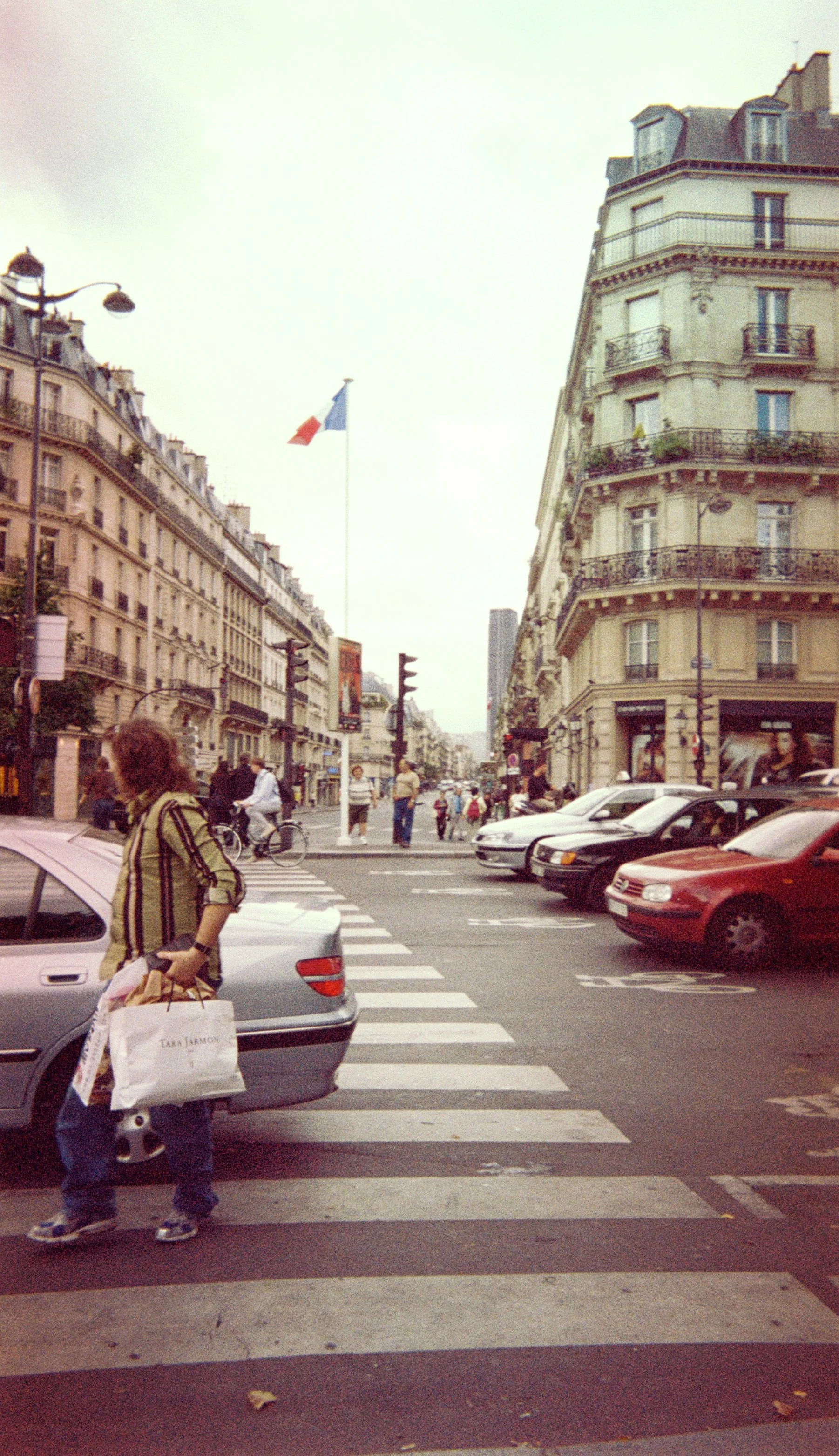
Last year, I finally developed a roll of film from an old disposable camera that I took on my first ever international buying trip back in 1999. This particular photo was taken on the streets of Paris, on the Boulevarde Haussman, where all the big fancy department stores were.
I will never forget the feeling of being in the chicest, most glamorous city in the world for the very first time. I was so jet-lagged but I didn’t care, I just wanted to get amongst it. In those days, we shopped-til-we- dropped, buying samples to bring back and “ knock-off” ( yep, we did that back then) and taking sneaky photos on our digital cameras because there was no such thing as a camera phone then. We often got chased out of shops for that as well.
These were heady days, I loved everything about it - the hectic pace , the excitement of business class travel , but most of all the fashion.
I’d be lying if I said I didn’t bring back a few outlandish trends that never managed to translate to the Australian market, but that was the name of the game , and eventually you learned which ones were just the icing and which ones were going to set the market on fire.
But as a Buyer, you are only as good as your gross profit in the end , so there was a lot of pressure that went with that as well. We’d often fly straight in to China with our bags of samples to visit factories, choose fabrics and get costings. We’d be having to build an on-trend, strategic, cohesive and profitable range, and our job was to choose the right things to back for our customers. We didn’t always get that right, but when we did, it was a rush like no other.
In the days before social media, trends took a lot longer to bubble up so you had a bit more time to react and test, unlike today when it’s pretty much instant, and your customers have so much more choice.
In today’s fast paced and competitive landscape it’s still about the results, but if you are a senior buyer , a buying manager or a category manager, you’ve also now got a team to lead. You have to inspire them, teach them to strategise and plan ahead, and empower them to be their best .
All this while managing 3 seasons at once, weekly trade, managing up, down and cross-functionally.
The KPI‘s are all important but if you haven’t built your leadership skills and emotional intelligence, you’re going find it difficult to crack that next promotion, and keep yourself healthy .
I had some incredible leaders as I came through the ranks, who I am still inspired by today. There were also a few who weren’t so great, and they also serve to remind me of what NOT to do.
It’s a juggling act, and companies all too often promote high-performers without the necessary up-skilling. And that sets nobody up for success.
My leadership style was always to explain, be clear and honest and let my people do what they needed to do. I let them make mistakes, and I taught them how to self-correct quickly.
I didn’t know I had ADHD back then, but I do know that my creative and fast-thinking brain set me up to be a GREAT Buyer
What I say to emerging leaders now, is to be the leader you needed when you were coming through.
Always learn, never micro-manage and learn to laugh at yourself.
Nobody is going to die if that dress is 3 cm too short.
Warmly,
Sally